Gas Line Repair & Inspection in Maspeth, Queens
Natural gas powers the central heating boilers, domestic water heaters, and cooking ranges that sustain Maspeth properties. Because natural gas operates under continuous line pressure and carries severe fire, explosion, and asphyxiation risks, all gas piping repairs, pressure tests, and appliance hookups require strict safety protocols and licensed oversight.
⚠ Mandatory Emergency Gas Safety Rule
If someone smells gas, tell them to leave the building immediately and contact the gas utility or 911 from a safe location. Do not tell them to investigate the leak, operate electrical switches, or attempt a repair.
Never strike a match, operate light switches, use cell phones inside the building, or open gas piping when an odor of rotten eggs (mercaptan) is detected. Reach outdoor safety first and notify emergency responders.
Licensed Gas Piping Diagnostics & Upgrades
Natural gas infrastructure in Maspeth residential two-family homes, commercial storefronts along Grand Avenue, and light industrial facilities typically relies on threaded black iron pipe. Decades of basement atmospheric humidity, building vibration from nearby transit corridors, or substandard past work can cause threaded joint deterioration or corrosion on fuel manifolds.
For non-emergency situations—such as resolving utility-issued violation tags, clearing gas meter lockouts, or requiring professional gas line repair Maspeth Queens property managers count on structured diagnostic workflows. We examine fuel trains feeding your central boiler repair in Maspeth heating plant, high-demand water heater repair appliances, and apartment cooking drops.
Need Non-Emergency Gas Diagnostics or Appliance Piping?
Call our technical service line to speak directly with an experienced professional.
☎ Call (315) 202-8009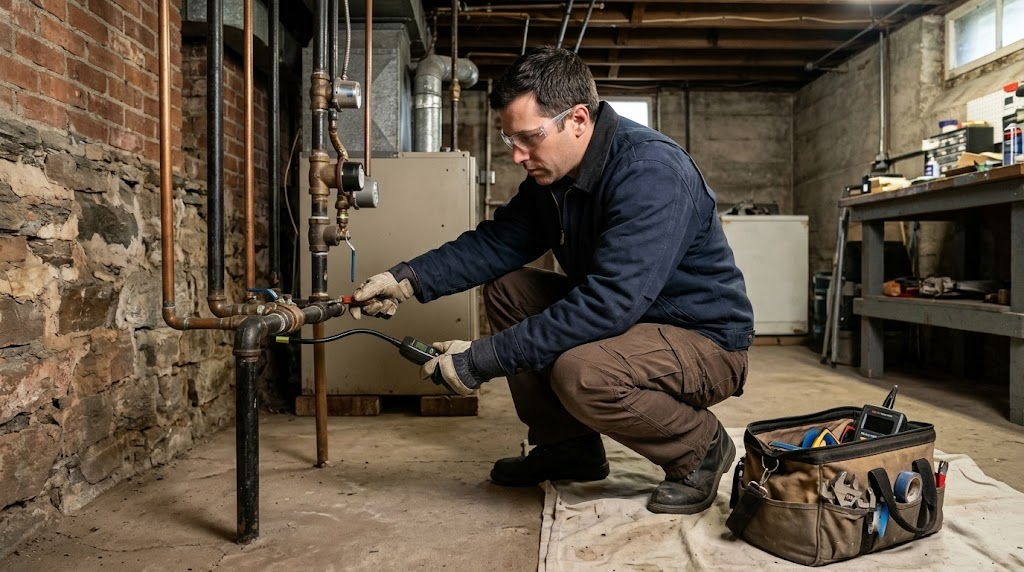
Signs of Damaged or Substandard Gas Piping
Identifying fuel gas deficiencies early allows property owners to schedule planned repairs before utility meters are locked out or hazardous conditions emerge.
Exterior Flaking & Pitting Rust
Damp Maspeth cellars cause heavy surface oxidation on black steel pipe. Pitting rust reduces pipe wall thickness and compromises structural mechanical integrity, particularly around threaded elbows, unions, and pipe hangers.
Unapproved Valves & Saddle Tees
Outdated brass ground-key stopcocks, unbonded corrugated tubing, or unapproved flexible connectors violate current NYC building codes. Gas trains require full-port, quarter-turn ball valves rated specifically for natural gas service.
Hissing Regulators & Pressure Drops
Faint whistling or pressure fluctuations at the meter manifold indicate failing regulators or restricted lines, starving the boiler during peak winter ignition and causing burner lockouts.
NYC Building Codes, Licensed Oversight & Local Law 152
Under New York City Construction Codes, all fuel gas piping modifications, appliance connections, and safety tests must be performed by or under the direct supervision of an NYC Licensed Master Plumber (LMP).
NYC Local Law 152 Periodic Inspections
Under NYC Local Law 152, commercial and multi-family residential buildings (excluding R-3 two-family residences that fall under statutory exemptions) must complete periodic gas piping inspections according to community district cycles.
A comprehensive gas piping inspection Maspeth Queens surveys exposed piping from the service point of entry through public hallways, boiler rooms, and common tenant spaces. Technicians employ calibrated combustible gas detectors to identify corrosion, illegal fittings, or joint leaks, helping owners obtain necessary certifications and file mandated GPS1 inspection documentation with the Department of Buildings (DOB).
Stove Connections & Appliance Piping
Upgrading to a high-BTU commercial-grade range or adding a gas dryer in a Maspeth residence requires dedicated pipe sizing. For an authorized gas line installation for stove Maspeth Queens technicians verify line capacity to avoid pressure drops when your primary heating boiler starts up.
We install rigid black iron drops, dedicated gas ball shutoffs, ANSI-certified flexible stainless connectors, and conduct bubble-leak and manometer pressure tests. If you are converting heating fuels alongside a boiler replacement, full load sizing calculations ensure safe gas volume.
Pneumatic Pressure Testing & Utility Lockout Restoration
When National Grid or Con Edison locks a gas meter due to an inspection tag or pressure drop, service restoration requires a methodical, legally compliant procedure:
- System Isolation: All connected gas appliances, boilers, heaters, and ranges are isolated to pressure-test the pipe manifold independently.
- High-Pressure Air Testing: The piping is pressurized with air or inert gas using a calibrated mercury or digital manometer to monitor for pressure loss over the duration mandated by the NYC Fuel Gas Code.
- Targeted Joint Remediation: If pressure falls, electronic sniffers and non-corrosive bubbling solutions pinpoint microscopic thread leaks for segment replacement.
- DOB Inspection & Utility Turn-On: Once the piping holds test pressure with zero drop, documentation is submitted to the NYC Department of Buildings for official inspection and subsequent utility meter turn-on.
Schedule Gas Piping Diagnostics & Inspection
Speak directly with our technical team to discuss your building piping requirements, Local Law 152 questions, or appliance connections in Maspeth and Middle Village.
☎ Call (315) 202-8009